.png?imageMogr2/format/webp)







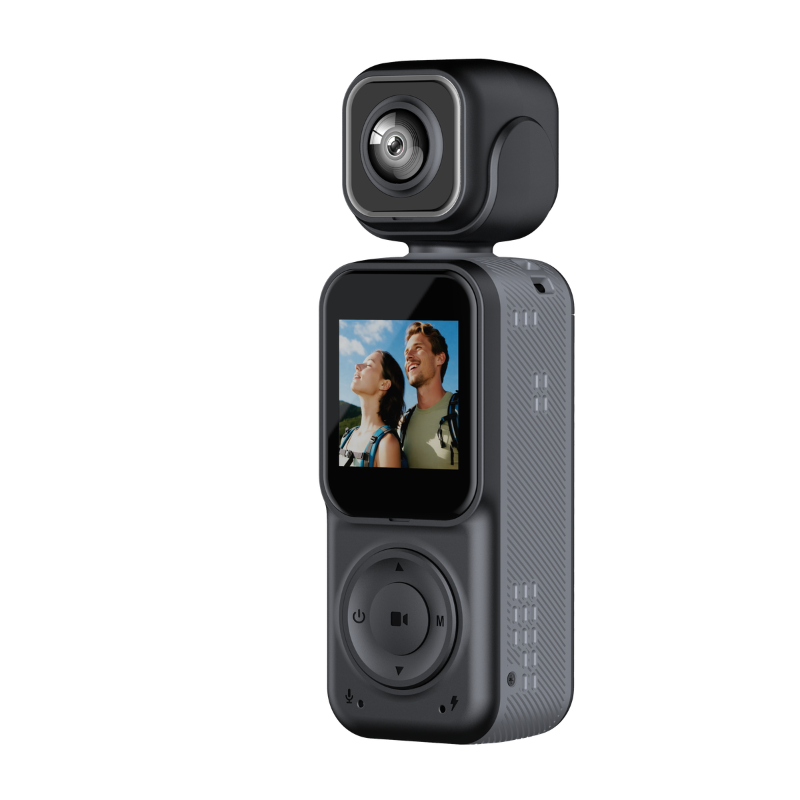
Most sourcing conversations open with the wrong question: do you do OEM? Almost every factory says yes, and the answer tells you nothing. What matters is how far the product can move from what the factory already builds.
OEM, ODM and white label are three different answers to one question — who defines the product. Confusing them is expensive in a specific way. A buyer who believes they have commissioned a custom device discovers at the tooling stage that they have bought a rebranded catalogue item, or the reverse, and pays for development the project never needed.
This guide sets out what each model means in practice, where the boundary between them actually sits, what each one costs beyond the unit price, and how to brief a factory so that the answer you receive matches the product you intended to buy.
The Three Terms Are Not Used Consistently
Before comparing quotations, it helps to know that these three words are used differently on different sides of the same transaction. In much of the sourcing market, OEM is used loosely to describe any product that carries the buyer's logo, including a catalogue item with a sticker on the box. In European and North American procurement, OEM means that the buyer's specification is manufactured by a third party.
The outcome is predictable. Two suppliers quote the same project using the same word and mean two different things: one is offering a logo on an existing shell, the other is quoting tooling for a new housing. The unit prices differ by a factor that has nothing to do with either factory being expensive.
A more useful habit is to stop asking which model a factory offers and start asking which parts of the product are allowed to change. That answer is specific, checkable, and difficult to fudge.
White Label, ODM and OEM: What Each One Means
White Label
The factory's existing product is sold under your brand. Change is normally limited to the logo, the colour of the housing, the retail packaging and sometimes the app name. The product itself — housing, board, firmware behaviour, camera module — stays as it is.
The advantage is speed and predictability. There is no tooling, no engineering cycle and no new certification work, because the product already exists and is already certified. The limitation is differentiation: if a competitor buys from the same factory, the two of you are selling the same device with different boxes.
This is the sensible model when the product is a commodity in your range, when the market window is short, or when you are testing a category before committing to development.
ODM
The factory designs and develops the product, and you select from its platform or ask for changes around the edges: a different housing colour, a modified bracket, your packaging, your app skin, occasionally an additional feature.
The commercial point that matters is ownership. In an ODM arrangement the design generally belongs to the factory. You are buying the right to sell it under your brand, and whether that right is exclusive is a contract term rather than a default.
ODM is the most common model in this category for a straightforward reason: the factory has already spread the engineering and certification cost across many buyers, so the unit price is lower than a comparable OEM programme and the timeline is shorter.
OEM
You define the product. That may mean supplying a complete specification and industrial design, or it may mean starting from a reference platform and changing the parts that matter: the camera module, the sensor, the housing, the board layout, firmware behaviour, the accessory set.
OEM work carries the engineering. Tooling for a new housing, prototype rounds, tuning, and a certification cycle for the final configuration. It is slower and more expensive per unit at low volume, and it is the only route to a product that is genuinely yours.
Strictly, OEM means the buyer owns the design. In practice the boundary between a heavy ODM project and a light OEM project is a matter of degree, which is why the questions in the next section are more reliable than the labels.
Where the Line Actually Falls
Three questions separate the models more reliably than any definition.
- Who owns the industrial design and the tooling? If the factory's existing mould is used, this is not an OEM housing. If a new mould is cut for you, establish in writing who owns it and whether it can be transferred.
- How deep can the electronics change? Cosmetic changes are surface work. Changing the camera module, sensor or board layout changes performance, power, thermals and certification. Ask which of those are possible on the platform, not whether customisation is available in general.
- Who is named as the manufacturer on the product and in the certification documents? This decides who carries the legal obligation, and it is frequently not the party the buyer assumes.
| Model | Design authority | What can change | Typical fit |
|---|---|---|---|
| White label | Factory | Logo, packaging, sometimes colour | Fast entry, commodity range |
| ODM | Factory | Surface changes, packaging, app branding | Most brand programmes |
| OEM | Buyer | Housing, electronics, firmware, accessories | Genuine differentiation |
What You Are Really Paying For
Comparing unit prices across the three models is where budgets go wrong, because the unit price is the smallest part of the difference.
Tooling
An injection mould is a one-time cost. It may be quoted separately, amortised into the unit price, or absorbed by the factory in exchange for a volume commitment. A quotation that omits tooling is not cheaper than one that includes it; it is simply incomplete.
Engineering and samples
Development time is charged either explicitly as an engineering fee or implicitly inside the unit price. Sample rounds are part of this cost. Ask how many evaluation rounds are included and what happens commercially if the design needs another one, because that question is far easier to answer before the project starts than in the middle of it.
Certification
Certification is charged per model, per market and per configuration. A change to the radio module or the power section can make existing test reports unusable, which quietly turns a cosmetic change into a compliance project with its own timeline.
Packaging
Printing plates, retail box tooling and manuals are charged per version. A second colour or a second language can create a second packaging minimum even when the product inside is identical.
Minimum order
Minimum quantities usually apply per model, per colour and per packaging version rather than to the order as a whole. A buyer planning three colours should confirm whether that is one minimum or three before building a price model around it.
Who Carries the Certification
This is the point where a private-label programme most often surprises the brand. Under EU market-surveillance rules, the party that places a product on the market under its own name is treated as the manufacturer. If the product carries your brand and your address, you are the entity that signs the declaration of conformity — even though someone else designed and built it.
That has practical consequences. You need the test reports, not a picture of a certificate. You need to know which model and which configuration those reports cover. And you need to know what happens when a component changes: whether the factory will re-test, at whose cost, and who updates the documentation afterwards.
For buyers in the United States and the United Kingdom the mechanics differ, but the underlying question is identical: which documents do you hold, covering which model, and who is responsible for keeping them valid. A supplier-evaluation framework for this sits alongside the sourcing questions covered in our guide to choosing a reliable dashcam manufacturer, and the same logic applies to camera categories generally.
How to Brief a Factory
A brief that answers these eight points produces comparable answers from different factories. A brief that says “we want a dashcam, OEM” produces eight different products and eight quotations that cannot be compared.
- Target markets and sales channel — this determines certification scope and packaging language.
- Target retail price and required landed cost — this sets the platform, not the other way round.
- Required functions, and functions you want to avoid — the second list is as useful as the first.
- Industrial design direction and reference products — yours or a competitor's.
- Packaging and accessory set — retail box, inserts, mounts, cables.
- Certification scope by market — which markets, which product configuration.
- Volume forecast by model, colour and packaging version — because minimums apply per version.
- Launch date, worked backwards — into tooling, samples and certification.
The eighth point is the one most often missing, and it decides whether the project is feasible at all. Working backwards from a launch date is how a factory can tell you honestly whether a new housing is realistic, or whether the launch has to go out on the existing platform.
Five Mistakes That Cost Money
- Asking whether the factory does OEM. Ask what can be changed and what cannot; the second question has an answer.
- Comparing quotations with different scopes. One includes tooling, one does not, one assumes an existing certificate. The lowest number is often the least complete.
- Treating a logo as a product. A new brand on an existing device creates neither differentiation nor exclusivity.
- Swapping the radio module to save cost. It can invalidate the certification the whole programme depends on.
- Leaving mould ownership unstated. If you paid for tooling, the agreement should say where it lives and whether it can be moved.
How Yuaoheng Approaches OEM and ODM Work
Yuaoheng works across the range rather than in one box: from branding and packaging on an existing platform, through housing and hardware changes, to development based on drawings or supplied samples. Which of those applies depends on how far a project needs to move from the reference model.
The process is published in six stages: project briefing, R&D integration, prototype validation, precision tooling, global compliance, and market launch. The useful thing about a staged process is not the number of stages but that each one produces something a buyer can inspect — a specification, a sample, a test report — before the next one is funded.
That is also why the starting point for a conversation is not a model number. It is the application, the market, the volume and the launch date, because those four inputs decide whether an existing platform will do or whether development is required. The full service scope is set out on the OEM/ODM services page, and the same evaluation logic applies to action camera programmes as to dashcam projects.
Not sure whether your project needs ODM or OEM?
Send us the application, the target market, your expected volume and your launch date. We will tell you which parts of the product can change on an existing platform, and where development would actually be required.
Choose by Design Authority, Not by Label
White label, ODM and OEM are not quality tiers. They describe how much of the product you define, and therefore how much of the cost, risk and differentiation you carry. A brand that needs speed and a broad range should not be paying for tooling. A brand whose entire proposition rests on a product nobody else has should not be buying a catalogue item with its logo on the box.
The practical test is short. Ask which parts of the product can change, who owns the design and the tooling, and who is named on the certification. Those three answers place the project on the spectrum without anyone having to agree on vocabulary first. For a wider view of how a manufacturing partner should be assessed, see our guide to evaluating a smart video doorbell manufacturer — the criteria carry across categories.
.jpg?imageMogr2/format/webp)