.png?imageMogr2/format/webp)
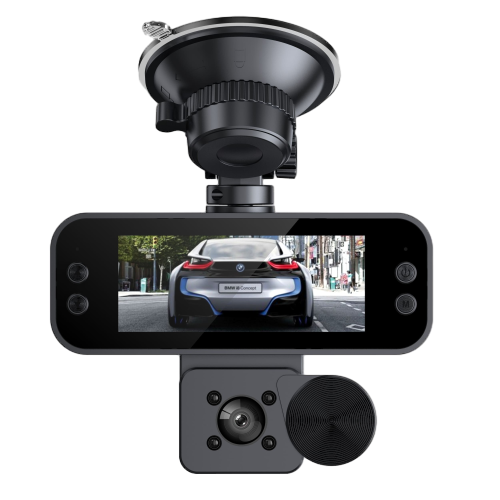
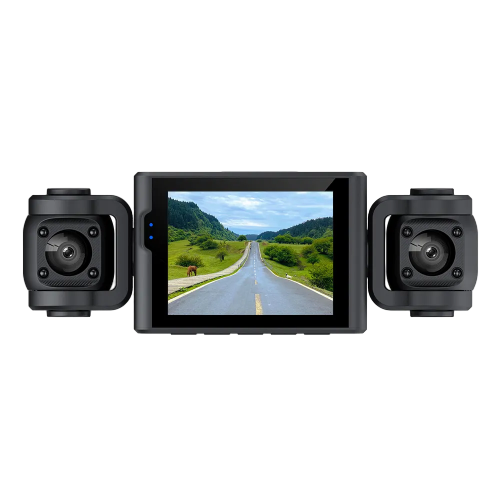
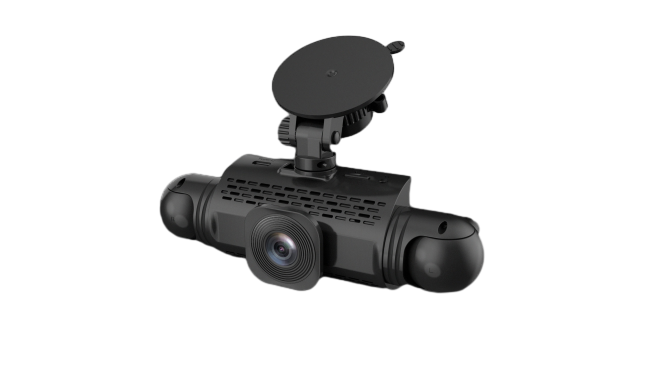
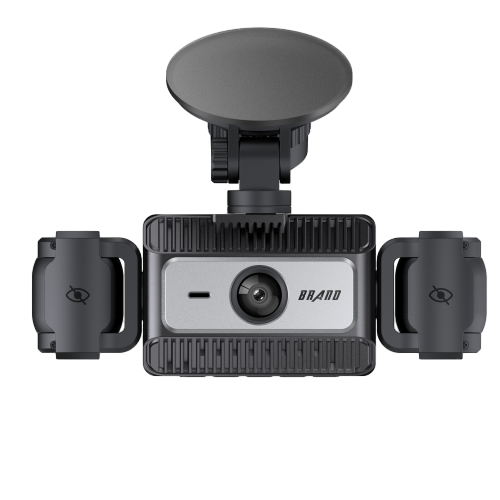
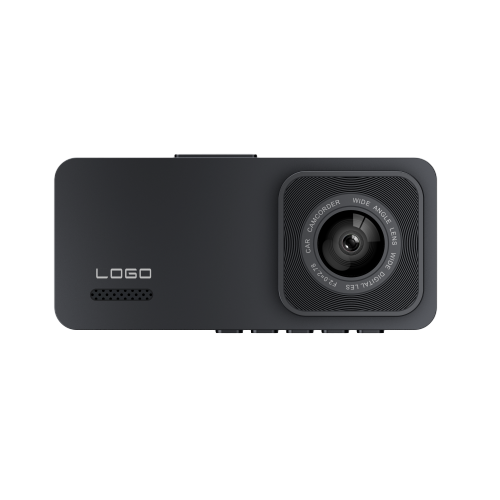
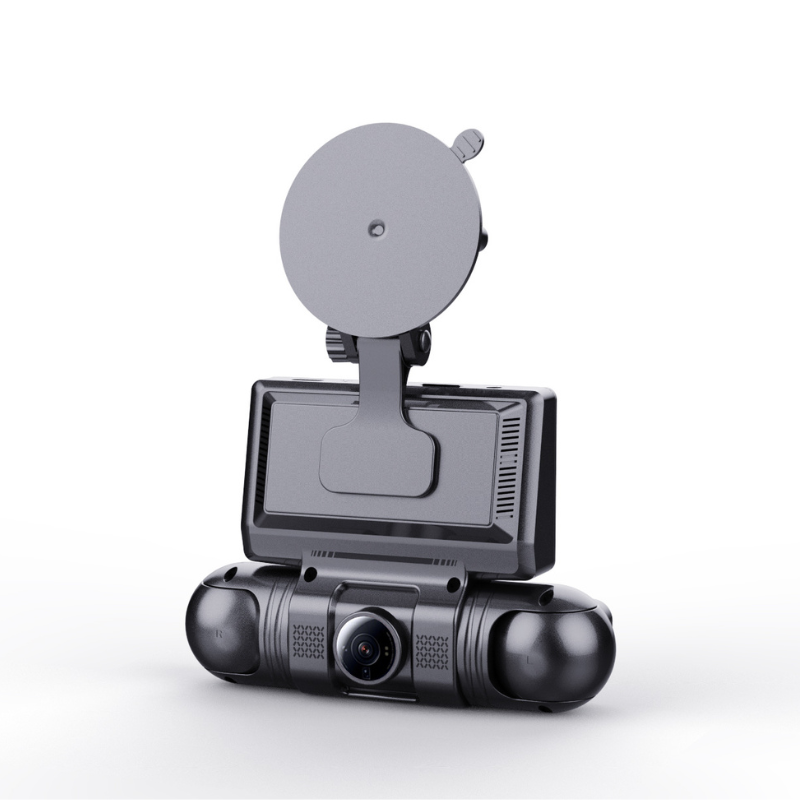
You pull up behind a car at night, close enough that the plate fills the screen. The next morning the footage shows a bright white rectangle with nothing written on it. The camera was recording. The lens was clean. Nothing failed.
A number plate is one of the hardest things a dashcam is ever asked to capture. It is small, it is a fixed distance away, it moves relative to the lens, and it only becomes important after the fact — when there is no second chance to record it. Whether your footage is readable comes down to three measurable quantities: how many pixels land on the plate, how far the plate moved while the shutter was open, and how much of that detail the encoder kept.
All three can be calculated before you buy. This guide does the arithmetic, applies it to the front-channel specifications of real models, and ends with the five questions that settle the specification with a supplier.
A Plate Needs About a Hundred Pixels
Automated plate recognition systems are specified in pixels, not in resolution. The numbers used in commercial deployments vary with the algorithm and the plate format, but they cluster in the same place: a plate is expected to occupy roughly 100 to 130 pixels across before recognition is reliable, with some systems accepting less and many asking for more.
That figure is not arbitrary. A plate carries seven or eight characters, each with strokes a few millimetres thick. At 100 pixels across a 520 mm plate, one pixel covers about 5 mm of the plate, so a character stroke resolves into three or four pixels. Lose half of those to blur or compression and the shapes that distinguish 8 from B, or 0 from D are gone. The plate is still visible as an object; the characters are not recoverable.
This is why “it looked clear on the screen” and “I can read it in the clip” are two different tests. A human reading a single frame at a known context can infer a character from a smudge. A person reviewing footage of an unfamiliar vehicle, or an insurer deciding a claim, cannot.
Two Numbers Decide It, and Only One Is on the Box
Resolution tells you how many pixels the sensor produces. It says nothing about how much of the road those pixels are spread across. That second quantity is the field of view, and it is usually printed in small type on the side of the box, if at all.
Put the two together and you get the only number that matters for a plate: millimetres of real world per pixel. For a pinhole projection it is simply the width of the scene at that distance divided by the horizontal pixel count:
mm per pixel = 2 × distance × tan(FOV ÷ 2) ÷ horizontal pixels × 1000
Wide-angle lenses are not pinholes, and their real projection bends towards equal angular spacing at the edges, so treat the result as an estimate with a margin. The ranking between configurations does not change, and it is the ranking that decides what you buy.
Applied to a 520 mm plate at three following distances, the five combinations sold in this category separate sharply:
| FRONT CHANNEL | PLATE AT 10 m | AT 5 m | AT 3 m | 100 px REACHED AT |
|---|---|---|---|---|
| 1080p, 110° | 35 px | 70 px | 117 px | 3.5 m |
| 1080p, 130° | 23 px | 47 px | 78 px | 2.3 m |
| 2K, 110° | 47 px | 93 px | 155 px | 4.7 m |
| 4K, 130° | 47 px | 93 px | 155 px | 4.7 m |
| 4K, 150° | 27 px | 54 px | 89 px | 2.7 m |
Calculated for a 520 mm plate. A 440 mm plate reduces every pixel count by about 15 %, which pulls the 100 px distance in by the same proportion.
Two rows in that table are worth more attention than the rest.
2K at 110° and 4K at 130° produce identical numbers. Quadrupling the pixel count buys nothing if the lens spreads them wider by the same factor. The price difference between those two configurations does not buy plate detail; it buys something else, which is worth understanding before paying for it.
4K at 150° is the worst of the five, worse than plain 1080p at 110°. This is the configuration with the biggest number on the box and the poorest pixel density in the group. It exists because a 150° front lens records more of a junction, and more of a junction sells to a driver who is not thinking about plates.
What This Looks Like on Real Models
The same arithmetic applies to the front channel of the dashcams in this category, using their published resolutions and lens angles. The spread within a single product family is larger than most buyers expect:
| MODEL | FRONT CHANNEL | FRONT FOV | 100 px AT |
|---|---|---|---|
| D2-1 / D3-1 | 4K + 2K, 3840 × 2560 | 150° | 2.7 m |
| SQ2 | 4K + 2K, 3840 × 2560 | 130° | 4.7 m |
| S23Q | 2K + 1080p × 3, 2560 × 1440 | 110° | 4.7 m |
| S2Q / S19Q | 2K + 720p × 2, 2560 × 1440 | 110° | 4.7 m |
| S21 / S22 / S8 | 1080p + 720p × 2 + 480p | 110° | 3.5 m |
| S29S / S30S | 1080p + 480p × 3, 1920 × 1080 | 130° | 2.3 m |
A 4K front camera with a 150° lens reaches usable plate size at 2.7 m. A 1080p front camera with a 110° lens reaches it at 3.5 m. The second camera costs less to build and produces the better evidence for this specific job, which is exactly the sort of result that gets lost when a specification is compared on resolution alone.
If your requirement is the widest possible coverage of what happens beside and behind the vehicle rather than the plate of the car directly ahead, the trade runs the other way and a wide front lens is the correct choice. That is a different question from this one, and it is the question covered in our comparison of dual-channel and triple-channel configurations, where the same trade is worked in the opposite direction.
Night Takes Light Away Four Times Faster Than Distance
At night the plate in front of you is lit by your own headlights. That light travels from the lamp to the plate, and then from the plate back to the lens. Both legs of the journey obey the inverse square law, so the light returning from a plate at distance D falls off as 1 ÷ D⁴.
The consequence is steep. Compared with a plate two metres away, one at ten metres returns 0.16 % of the light, and one at fifteen metres returns 0.03 %. This is why the same camera that reads a plate perfectly in a car park fails on a road: the illumination and the distance are working against it at the same time, and neither is under the camera's control.
Plates have one advantage that partly offsets this. They are made from retroreflective sheeting, which returns light preferentially back along the path it came from rather than scattering it. A plate in your headlights is therefore one of the brightest objects in the night frame — brighter than the car body around it, brighter than the road. Street lighting, which illuminates from the side, does not get this benefit and falls off only as 1 ÷ D².
That combination explains the actual failure mode. The problem at night is usually not that the plate is too dark to see. It is that the plate is bright, correctly exposed, and still unreadable — because brightness was never the missing quantity.
The Shutter Problem Nobody Mentions
A 30 fps camera has 33 milliseconds per frame. If the sensor is exposed for the whole of that interval — which is what most dashcams do at night, because it collects the most light — everything in the frame moves during the exposure, in proportion to how fast it is moving.
For a plate to stay legible, motion blur should be kept to roughly 20 mm of movement, about a quarter of a character width. Working backwards from your own speed gives the shutter the camera would need:
| YOUR SPEED | TRAVEL IN 1/30 s | SHUTTER NEEDED | LIGHT LOST |
|---|---|---|---|
| 20 km/h | 185 mm | 1/278 s | 3.2 EV |
| 30 km/h | 278 mm | 1/417 s | 3.8 EV |
| 50 km/h | 463 mm | 1/694 s | 4.5 EV |
| 80 km/h | 741 mm | 1/1111 s | 5.2 EV |
Light lost is the exposure you give up to freeze the motion, expressed in stops relative to the full 1/30 s frame. At 30 km/h the camera would have to expose for 7 % of the frame interval, which is nearly four stops darker than the frame it is trying to fill. No firmware avoids this trade; it only chooses where to sit within it.
This is the mechanism behind the most common night complaint. A camera that looks acceptable on a parked car turns into a white bar the moment the vehicle is moving, and the footage still looks sharp in every other part of the frame — because the road surface and the car body have low-contrast detail that survives the smear, while the plate does not.
Compression Deletes the Edges First
Video compression does not treat the whole frame equally. It divides each frame into blocks and spends its budget where the eye is most likely to notice loss. Sharp high-contrast boundaries consume the most data, because every block that contains an edge must encode the transition as well as the fill.
A plate is almost nothing but edges: dark characters on a light background, at small scale, in motion. When the encoder runs short of bitrate it coarsens the quantisation of those blocks, the character boundaries soften into the background, and the letters stop separating. The plate remains correctly exposed and correctly framed. It has simply been described to the decoder in fewer numbers than it takes to distinguish one character from another.
This is why two cameras with the same sensor and the same resolution can differ so much on plate legibility. Resolution is a fixed property of the sensor; bitrate is a decision, and it is usually made to fit a recording duration target rather than to preserve small text. A camera tuned for long loop times will compress harder, and the first thing to go is exactly the detail you need.
Bitrate is not one of the numbers buyers normally compare, and it is one of the few that can be raised without changing any hardware. Ask for it in writing, per resolution mode, rather than assuming a 4K label implies a 4K-grade budget.
What Actually Helps, in Order of Effect
The four levers below are not equally powerful, and they are usually discussed in the wrong order. Working from the top gives more result per unit of cost:
| LEVER | EFFECT ON PLATE PIXELS | COST |
|---|---|---|
| Halve the following distance | Doubles the plate width in pixels. Linear in distance, so it works every time. | Free |
| Narrow the front lens | 150° to 110° is a 1.7× gain in pixel density, with no change to the sensor. | Free, at the cost of side coverage |
| Raise bitrate | Keeps the character edges that compression would otherwise soften. | Shorter loop time on the same card |
| Raise resolution | Helps only when the lens is narrow enough to concentrate the extra pixels. | Higher unit cost, more heat, more storage |
WDR is a fifth measure that belongs in a separate category. It widens the range of brightness a single frame can hold, which matters when an oncoming vehicle's headlights or a bright plate fills part of the frame and pushes the rest into shadow. It does not add pixels and it does not stop motion. It fixes exposure, not legibility, and buying it expecting otherwise is the most common disappointment in this category.
Where the requirement genuinely is a readable plate at speed rather than a record of what happened, the honest answer is a different class of device: a dedicated plate-recognition camera with a narrow lens, a short shutter and a high fixed bitrate. A dashcam asked to cover 150° of road at 30 fps is making a different set of compromises, and no setting changes what the geometry allows. For the broader question of whether the higher resolution a dashcam is worth its price at all, see our notes on whether you actually need a 4K dash cam.
The Five Questions That Settle the Specification
Every quantity in this article can be answered by a supplier before an order is placed. These are the questions that change the outcome, in the order they change it:
| QUESTION | WHY IT DECIDES THE ANSWER |
|---|---|
| What is the horizontal field of view of the front lens, in degrees? | This is the single largest factor in plate pixel density, and it is often omitted from marketing material while resolution is printed in large type. |
| Is that angle optical, or is the frame stretched digitally afterwards? | A digitally widened frame interpolates the extra area. It adds no detail and softens the centre where the plate is. |
| Does the night mode drop the frame rate, and to what? | Lower frame rate means longer exposure, which increases motion smear at the same speed. A 30 fps mode and a 15 fps night mode are not the same product. |
| What bitrate is used per resolution mode, and can it be set? | Determines whether the character edges survive encoding, independent of sensor quality. |
| Can you send a night sample on a moving vehicle, with the speed stated? | A parked sample answers none of these questions. Footage of a moving car at a known speed lets you check all four figures above against a single clip. |
A supplier who can answer all five is one who has measured their product. A supplier who answers only the first, and only with a number printed on the box, is passing along a specification rather than describing a capability.
When the answers arrive and the comparison moves to price, our breakdown of how a dashcam quotation is calculated shows which lines are negotiable and which are fixed by the hardware inside them.
SPECIFY THE GEOMETRY, NOT THE NUMBER
Tell us the distance the plate has to be read at
Send us the plate format, the typical following distance and the driving speed. We will confirm which front-channel combination in our range suits that job, and what it cannot do.
Discuss Dashcam SpecificationsThe Limit Is Geometry
An unreadable plate is rarely a defective camera. It is a camera asked to do something the optics do not allow: cover a wide field, keep a wide field in focus at 30 frames per second, in light that has already lost 99.8 % of its intensity by the time it returns from ten metres away.
The useful conclusion is not that dashcams are bad at this. It is that the requirement should be stated as a distance and a speed instead of a resolution, and checked against pixel density before the order rather than against footage after the incident. A buyer who calculates once — pixels per plate at the distance that actually occurs — stops being surprised by night footage, and stops paying for resolution that the lens throws away.
If the programme extends beyond a single vehicle, the same logic scales into multi-channel specification for fleets. And when the specification is settled and the question turns to who builds it, our guide to choosing a dashcam manufacturer sets out what to verify on site.

.jpg?imageMogr2/format/webp)